
Cochlear implants
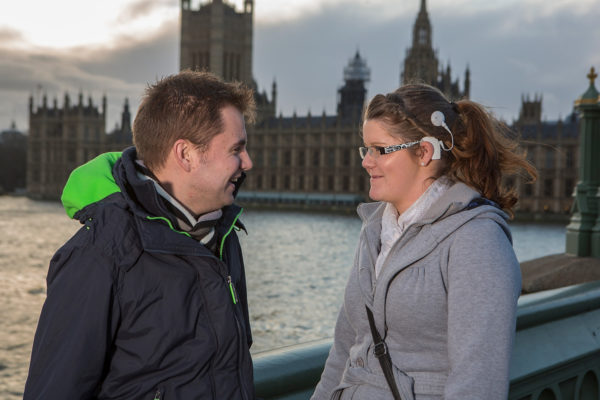
A cochlear implant is a surgically-implanted electronic device that provides a sense of sound to a person who has a severe or profound hearing loss.
It does not cure deafness or hearing impairment, but is a prosthetic substitute which directly stimulates the cochlea. There are over 250,000 users worldwide; with around *20,000 in the UK.
The expectations of how an implant can help a deaf person hear must be addressed prior to implantation. These must be discussed thoroughly with your surgeon.
Although the device can help the person hear better and detect environmental sounds, it is not as good as the quality of sound processed by a natural cochlea and therefore will not restore hearing to normal levels.
However it can be a significant improvement for the person in comparison to any previously tried hearing aids. Generally speaking, if the person implanted has lost their hearing after they have learnt language, cochlear implants can be a great help, in particular for people who have recently lost their hearing.
Although improvements are constantly developed for implantation techniques, there are risks attached to the surgery. This includes a chance that the surgery could fail and hearing will not be restored for the implantee.
Having said that, cochlear implants are the world’s most successful medical prostheses in that less than 0.2% of recipients reject it or do not use it and the failure rate needing reimplantation is around 0.5%.
Image: Courtesy of Advanced Bionics.
How does the implant work?
A cochlear implant completely by-passes the defunct normal hearing mechanism and stimulates the auditory nerve directly by means of an internally implanted electrode assembly.
Image: Courtesy of Cochlear Europe
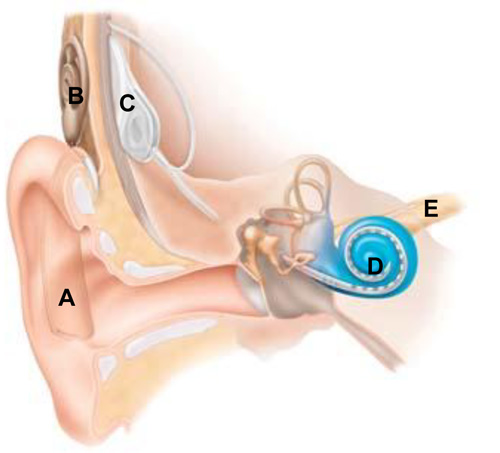
The sound processor (A) captures sound and turns it into digital code using a battery that powers the entire system. It transmits the digitally-coded sound through the coil (B) to the implant (C) just under the skin.
The implant (D) converts the digitally-coded sound into electrical signals and sends them along the electrode array which is positioned in the cochlea (the inner ear) (D).
The result is that the implant’s electrodes stimulate the cochlea’s hearing nerve fibres (E), which relay the sound signals to the brain to produce hearing sensations.
All systems of this kind have the same broad characteristics and design principles and are all well engineered.
Variations arise in styling, accessories and battery type. Particular differences exist in electrode design, MRI compatibility and speech processing strategies which encode the external sound frequency details into digital signals.
Cochlear implant surgery
During the operation the surgeon will make an incision behind the ear being treated, in order to gain access into the middle ear and cochlea.
The surrounding area behind the ear will be shaved to facilitate this and this will quickly regrow. The operation lasts about three hours and typically people spend one night in hospital.
Risks of cochlear implant surgery
The operation is a delicate and intricate procedure, rather than dangerous, because no vital organs are disturbed.
However, there is a chance that the surgery could fail and hearing will not be restored for the implantee. your surgeon will discuss this risks during your consultation appointment.
There are no serious attendant risks with this operation beyond those normally associated with major surgery. Implanted recipients are requested not to wash their hair for three weeks during this healing process but there are no other restrictions on normal activities.
How a cochlear implant works video
Courtesy of Advanced Bionics
Implant mentors
Find out about three implant mentor programmes which allow you to connect with others who have had similar experiences with hearing loss and implant treatment options.
Further information about cochlear implants
Visit these links for further information about cochlear implant organisations:
Please follow these links to the cochlear implant companies’ own websites:
- Advanced Bionics manufacturer of the Naida cochlear implant.
- Cochlear manufacturer of the Nucleus cochlear implant.
- MED-EL manufacturer of the Maestro cochlear implant.
- Oticon Medical manufacturer of the Digisonic cochlear implant.
Thanks to the National Cochlear Implant Users Association (NCIUA) for their help in creating this page.
*Source of statistics RNID
Webpage updated: April 2024